
Multilingual Instructional Design
Instructional design experts transforming complex SOP manuals and technical blueprints into engaging multilingual interactive modules.
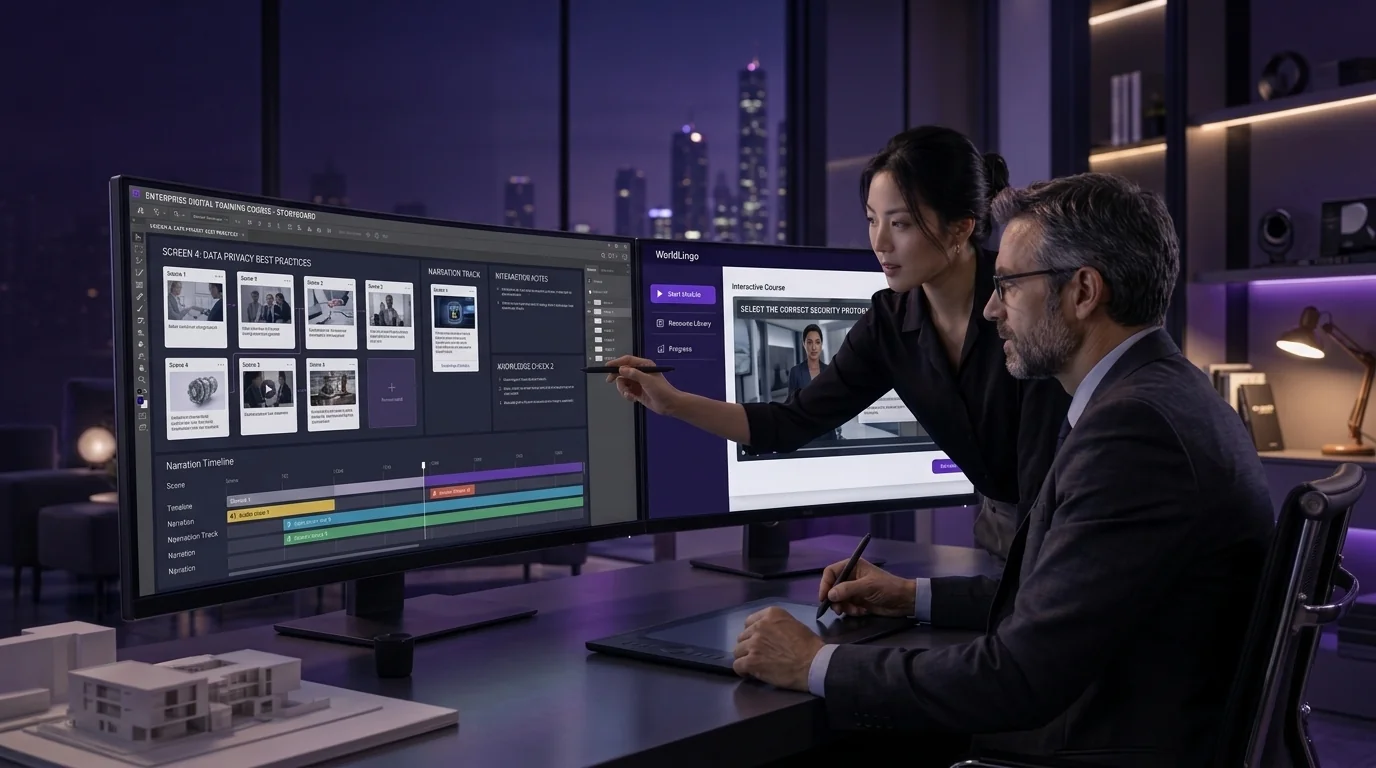
Instructional Design: Pedagogical Architecture and Cognitive Modeling for Global Learners
Instructional design is the architectural backbone of adult education, determining whether corporate training achieves genuine behavioral change or merely checks a compliance box. High-impact curriculum design translates abstract corporate knowledge into structured cognitive pathways, microlearning modules, and real-world application scenarios that resonate across diverse cultural learning preferences.
Linguist's instructional designers apply Bloom's cognitive taxonomy to translate business training goals into measurable behavioral objectives, then architect differentiated learning paths that account for cross-cultural cognitive preferences. Built-in Kirkpatrick four-level evaluation frameworks ensure that every training investment converts into quantifiable performance improvement.
- ✓ Bloom's taxonomy-based objectives translated into verifiable behavioral indicators
- ✓ Culturally differentiated learning paths for target-market cognitive preferences
- ✓ Microlearning decomposition optimized for mobile and on-the-go training scenarios
- ✓ Kirkpatrick four-level evaluation built in from the design phase for measurable ROI
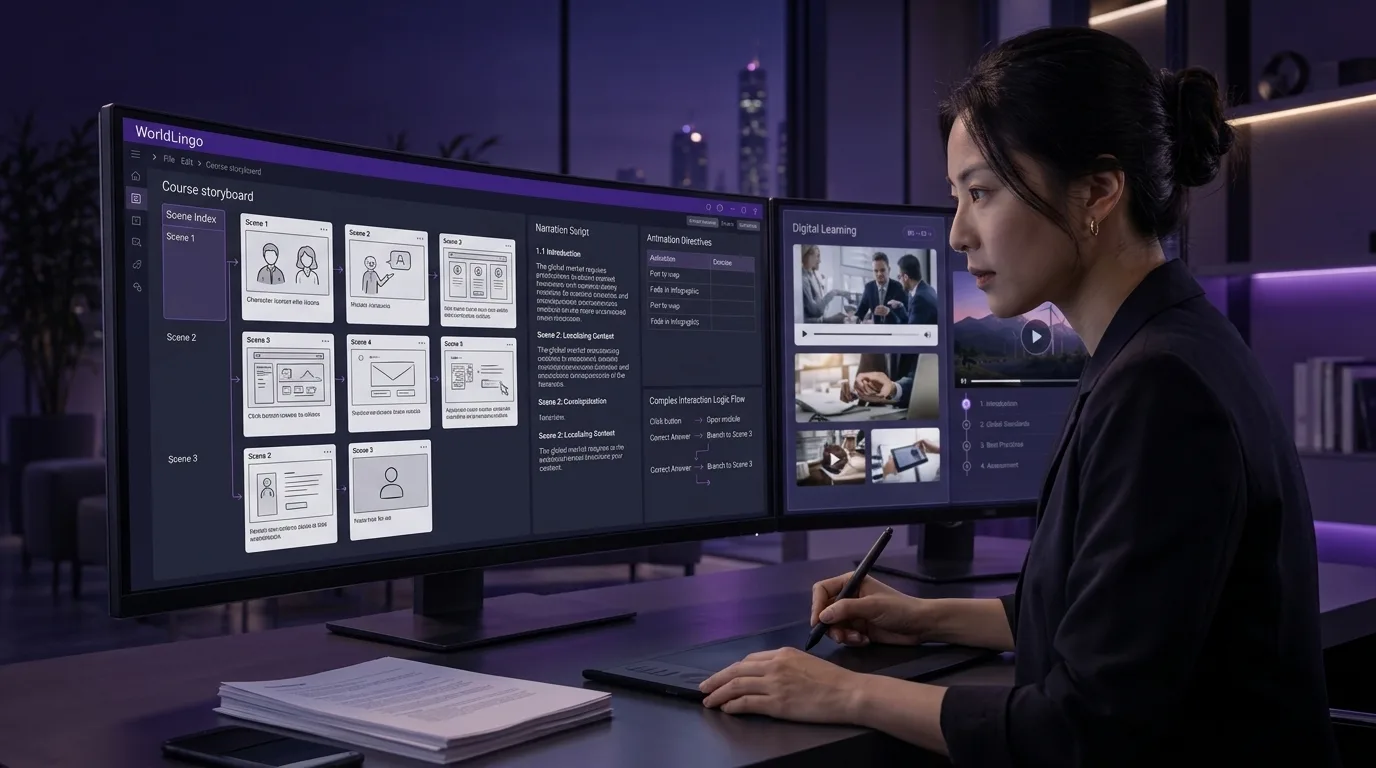
Teaching is Not Translating: Why Exported Training Fails Abroad
When multinational companies internationalize internal training programs, they often default to translating domestic slides and training manuals directly into English or local languages. Inevitably, international rollouts encounter severe resistance: overseas employees complain of disengagement, completion rates plummet, and field error rates remain unchanged. This breakdown stems from fundamentally divergent cognitive traditions and communication expectations. In low-power-distance Western learning cultures, passive didactic lectures provoke disinterest; adult learners expect self-directed, problem-centered (PBL) inquiry rooted in authentic case studies. Conversely, in hierarchical or collective cultures, clear step-by-step guidance and authoritative structure provide psychological safety. Global instructional design re-architects curricula at their pedagogical foundations, aligning content with local cognitive realities.
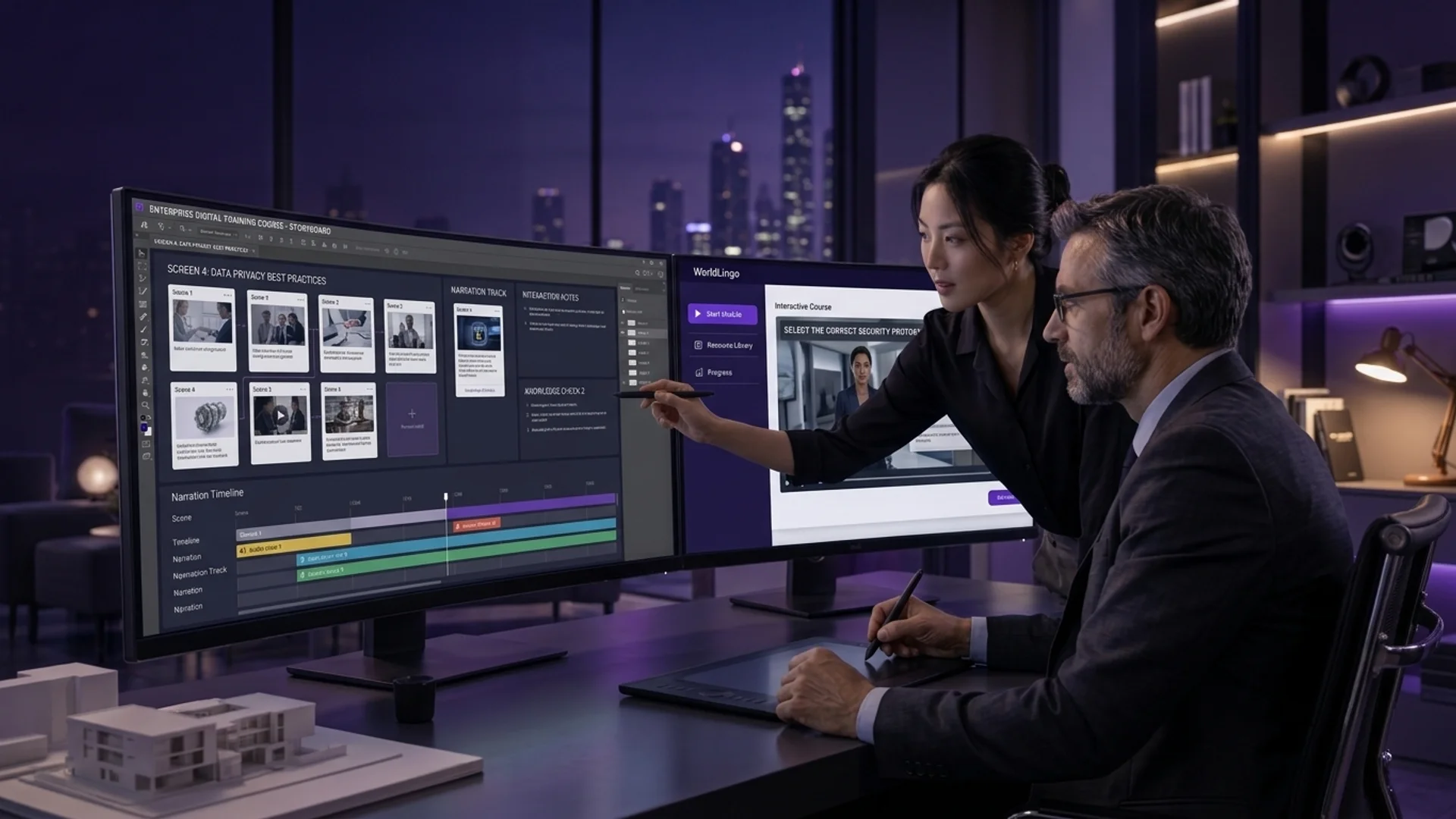
Bloom's Taxonomy & Kirkpatrick Metrics: Transforming Learning into ROI
Effective pedagogical systems design must withstand quantitative business scrutiny. Linguist's learning architects implement Bloom's Revised Taxonomy, categorizing objectives into rigorous cognitive tiers: Remembering, Understanding, Applying, Analyzing, Evaluating, and Creating. We replace ambiguous aspirations like 'understand product specifications' with concrete, measurable behavioral actions: 'troubleshoot hydraulic valve discrepancies' or 'calculate export tariffs.' Furthermore, we integrate the Kirkpatrick Four-Level Training Evaluation Model from the inception of design, architecting measurement tools that evaluate not just immediate learner satisfaction (Level 1) and knowledge retention (Level 2), but observable on-the-job behavioral shifts (Level 3) and direct organizational ROI (Level 4).
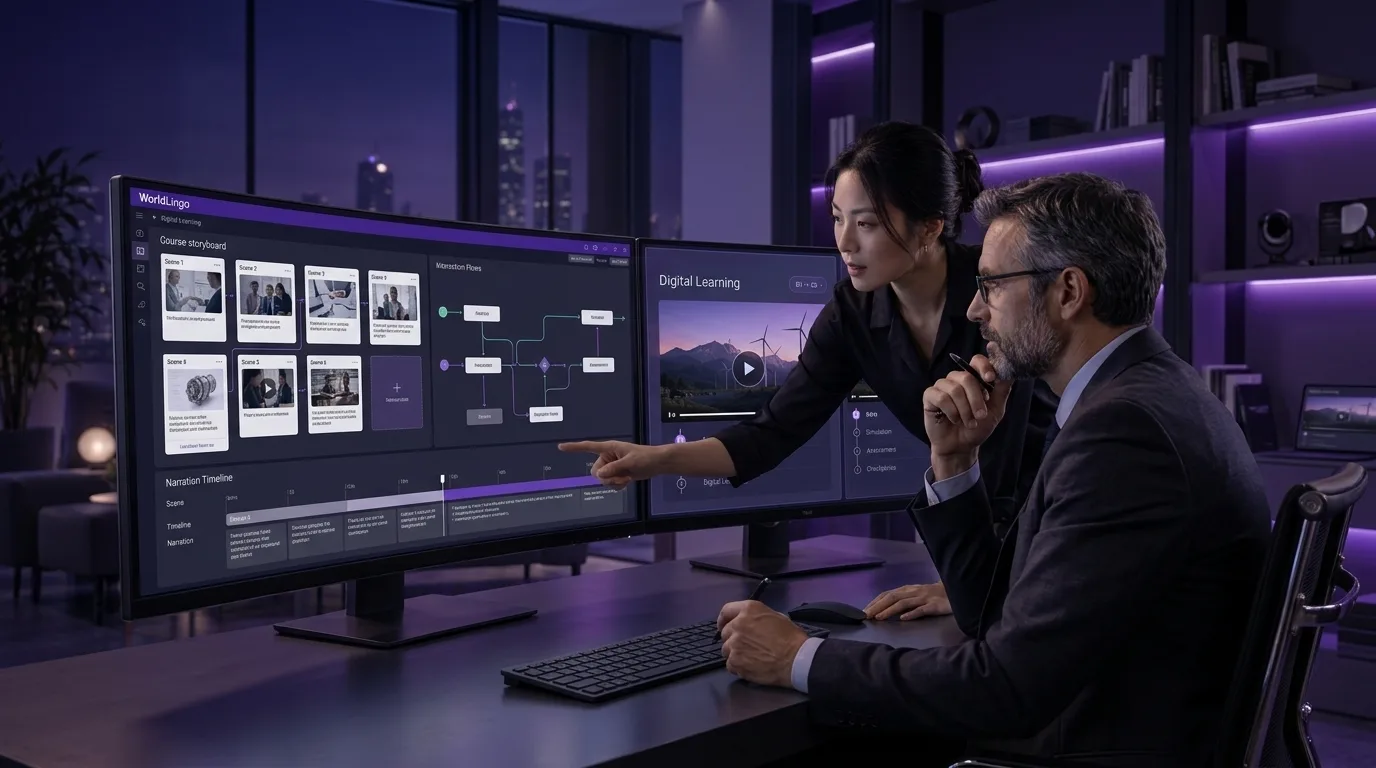
Cognitive Load Theory and Modern Microlearning Engineering
In today's fast-paced enterprise landscape, neither overseas field technicians nor sales representatives have the luxury of uninterrupted multi-hour classroom training sessions. Grounded in Sweller's Cognitive Load Theory, Linguist applies modern microlearning engineering to dismantle monolithic corporate manuals into focused, atomic modules of 3 to 7 minutes. Each bite-sized unit follows a closed-loop pedagogical rhythm: pain-point activation, atomic skill delivery, simulated branch decision, and instant feedback reinforcement. Employees digest and apply practical competencies seamlessly on mobile devices during workflow micro-moments, driving program completion rates upward by over 60%.
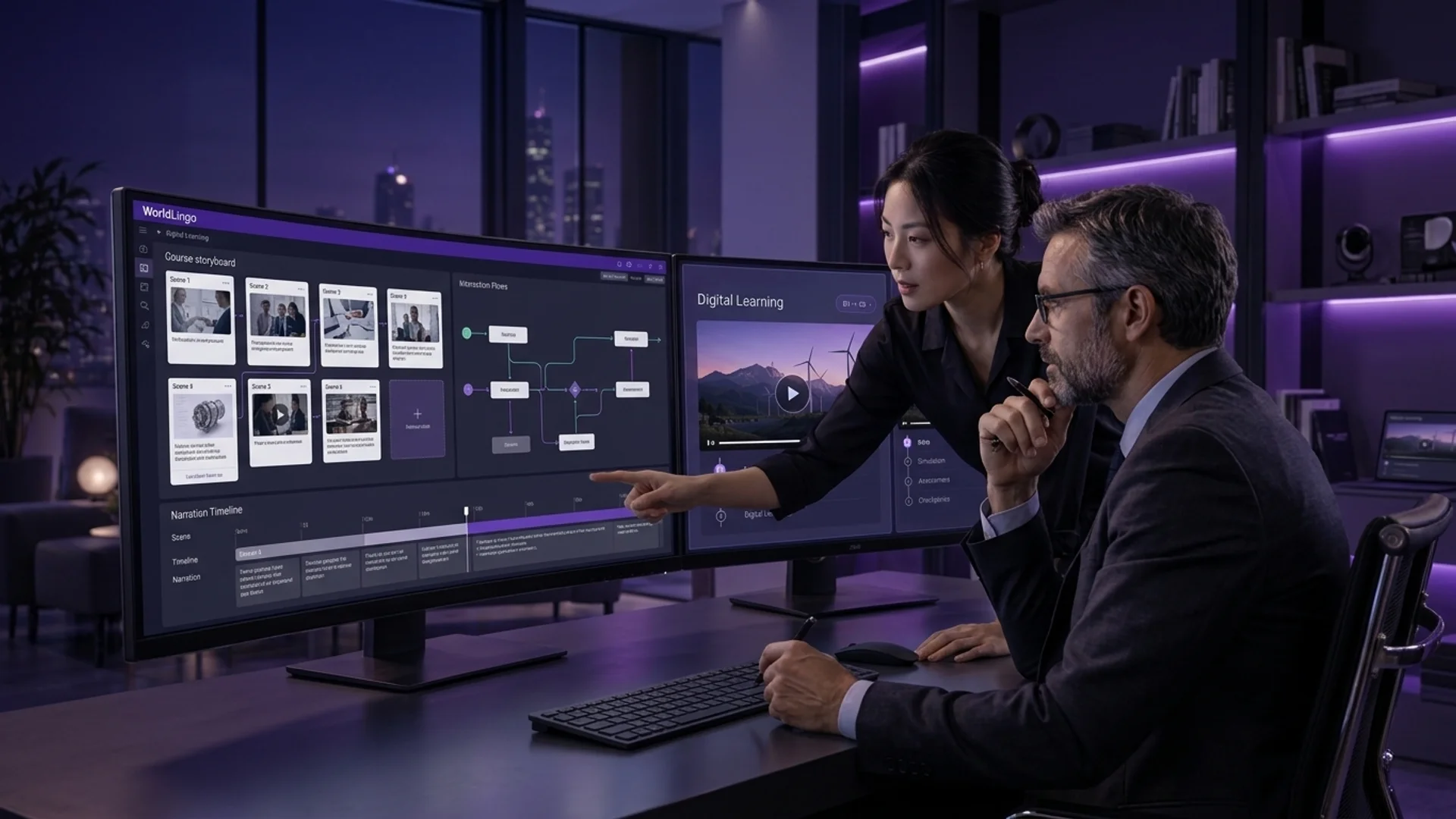
Enterprise Delivery Standards & Deliverables
Every specialized service includes full format fidelity, language asset retention, and end-to-end quality traceability.
Final Work Products
Full layout and visual hierarchy preservation across all file formats
- ✓ Format-Preserved Translations (Office/PDF/InDesign)
- ✓ Bilingual Side-by-Side Review Files
- ✓ Production-Ready Deployment Packages
Language Assets Package
Deliverables include durable digital assets for enterprise scale
- ✓ Enterprise TermBases (TB / Glossary)
- ✓ Standard Translation Memories (TMX / XLIFF)
- ✓ Do-Not-Translate & Brand Tone Guidelines
Quality & Compliance Proof
Meeting international regulatory and legal audit standards
- ✓ ISO 17100 Traceability Card & Sign-Off Report
- ✓ Official Certified Translation Certificate / Seal
- ✓ Strict Confidentiality Undertaking & NDA Compliance
SLA & Post-Delivery Support
Ongoing warranty to guarantee seamless business launch
- ✓ 30-90 Days Post-Delivery Revision Warranty
- ✓ Pre-Launch Testing Coordination & Fixes
- ✓ Dedicated Project Manager & Lead Linguist Support
Specific Scope Deliverables
Depending on scope, we can deliver the following and integrate with your toolchain:
SCORM & xAPI Standards · End-to-End Multilingual Courseware Localization
Enterprise e-learning localization demands full engineering reconstruction of triggers, variables, audio sync, and LMS tracking manifests. Linguist Translation adheres to industrial e-learning engineering standards for seamless deployment across global LMS platforms.
SCORM 1.2 / 2004 & xAPI Engineering Standards
Re-engineering imsmanifest.xml metadata schemas to ensure full compliance with SCORM 1.2, SCORM 2004 (2nd-4th Edition), and modern xAPI (Tin Can) protocols.
- ✓ Accurate lesson completion status (cmi.core.lesson_status) reporting
- ✓ Assessment scores and quiz weighting (cmi.core.score.raw) alignment
- ✓ Cross-device bookmarking and resume-state tracking synchronization
Articulate Storyline 360 & Rise Native Project Rework
Native engineering directly within .story and .cptx source files, adjusting timeline triggers, state layers, and responsive layouts.
- ✓ Variable triggers, conditional branching, and quiz engine reconstruction
- ✓ Interactive drag-and-drop, hotspots, and branching scenarios translated 1:1
- ✓ Typography expansion adjustments to eliminate text truncation in buttons
50+ Native Voiceover & AI Video Lip-Sync
Broadcast-grade studio voiceover with AI facial motion sync, making on-camera instructors naturally align with translated audio tracks.
- ✓ Curated global voice talent roster tailored for corporate instructional tone
- ✓ Waveform time-stretching to match original slide animations seamlessly
- ✓ Multitrack audio stems mastering with BGM and sound effects preservation
LMS Platform Sandbox Validation
End-to-end user journey validation on Cornerstone OnDemand, SAP SuccessFactors, Moodle, and Docebo sandbox environments.
- ✓ Cross-browser and responsive mobile touch gesture compatibility
- ✓ LMS package upload, manifest parsing, and gradebook sync verification
- ✓ Full QA checklist and signed LMS Compatibility Sign-Off Certificate
Standardized Instructional Systems Design (ISD) Workflow
From scope alignment through acceptance—clear quality gates and PM oversight.
Needs Analysis & Performance Profiling
Collaborate with business sponsors and Subject-Matter Experts (SMEs) to define commercial objectives, baseline competencies, and cultural variables.
Objective Taxonomy & Scope Architecture
Formulate quantifiable learning objectives using Bloom's Taxonomy, structuring module trees, prerequisite pathways, and delivery media matrices.
Pedagogical Strategy & HLDD Authoring
Define scenario-based branching or microlearning methodologies, delivering a comprehensive High-Level Design Document (HLDD) and assessment blueprint.
Cross-Cultural Peer Review & Calibration
Subject-matter educational consultants and native regional advisors audit the syllabus to eliminate cultural insensitivities and ensure case relevance.
Standards Delivery & Production Enablement
Deliver finalized syllabi, knowledge dependency maps, storyboard templates, and assessment rubrics to guide seamless courseware production.
Why Choose Linguist for Global Instructional Design
Rigorous ISD Theoretical Foundations
Built on ADDIE, SAM, Bloom's Taxonomy, and Gagne's Nine Events of Instruction, ensuring every module possesses rock-solid pedagogical grounding.
Cross-Cultural Cognitive Fluency
Deep awareness of regional learning traditions across North America, EMEA, and APAC, preventing the rejection of domestic teaching paradigms abroad.
Measurable Commercial Impact
Laser-focused on business outcomes: aligned with Kirkpatrick levels to transform training investments into observable workplace performance gains.
End-to-End Production Continuity
Architectures are engineered specifically to streamline subsequent Storyline authoring, multilingual dubbing, and LMS packaging.
Related E-learning Specializations
Explore adjacent specialized capabilities within the same enterprise domain.
Course Script Localization & Storyboarding
Designed for global e-learning courseware, multilingual interactive training, and enterprise microlearning. Transforming static technical documentation into industrial four-column production storyboards (OST, VO narration, visual directions, interactions) to master cross-lingual text expansion and pacing.
Interactive Courseware Development & Localization
Built for global digital onboarding, industrial simulation training, and international e-learning institutions. Leveraging Articulate Storyline, Rise, and Adobe Captivate to deliver source engineering refactoring, complex variable trigger adaptations, RTL layout mirroring, and responsive HTML5 courseware.
Multilingual Full-Course Localization & Transcreation
Designed for corporate academies, international product rollouts, and global online institutions. Providing turnkey multilingual localization across interactive courseware, facilitator guides, participant handbooks, voiceovers, and assessments to empower global workforces.
E-Learning Voiceover, Dubbing & Subtitling
Designed for global microlearning, corporate video onboarding, and international e-learning institutions. Delivering native instructional voiceover across 80+ locales, studio noise-reduction mastering, sub-second cue synchronization, slide-ID tagged audio slicing, and multi-format subtitles.
LMS Publishing, Packaging & Compatibility QA
Built for enterprise academies, global digital learning systems, and commercial courseware developers. Resolving multinational LMS deployment bottlenecks through SCORM/xAPI packaging, runtime JavaScript API debugging, learning telemetry validation, and multi-device compatibility QA.
Frequently asked questions
Common questions on pricing, turnaround, confidentiality and file formats—contact us for anything else.
Ready to Start Your Project?
Submit your requirements and files. Our consultant will provide a transparent quote and timeline within 24 hours.
What is included in Instructional Design?
How much does Instructional Design (E-learning) cost?
What factors affect translation pricing?
How long does translation take?
Can you handle urgent projects?
Do you sign NDAs and protect confidential files?
Ready to Start Your Project?
Submit your requirements and files. Our consultant will provide a transparent quote and timeline within 24 hours.
Ready to start your instructional design project?
Curriculum architecture, learning journeys, knowledge maps and modular design.